
What Belt Accessory Trends Will Define 2026–2027


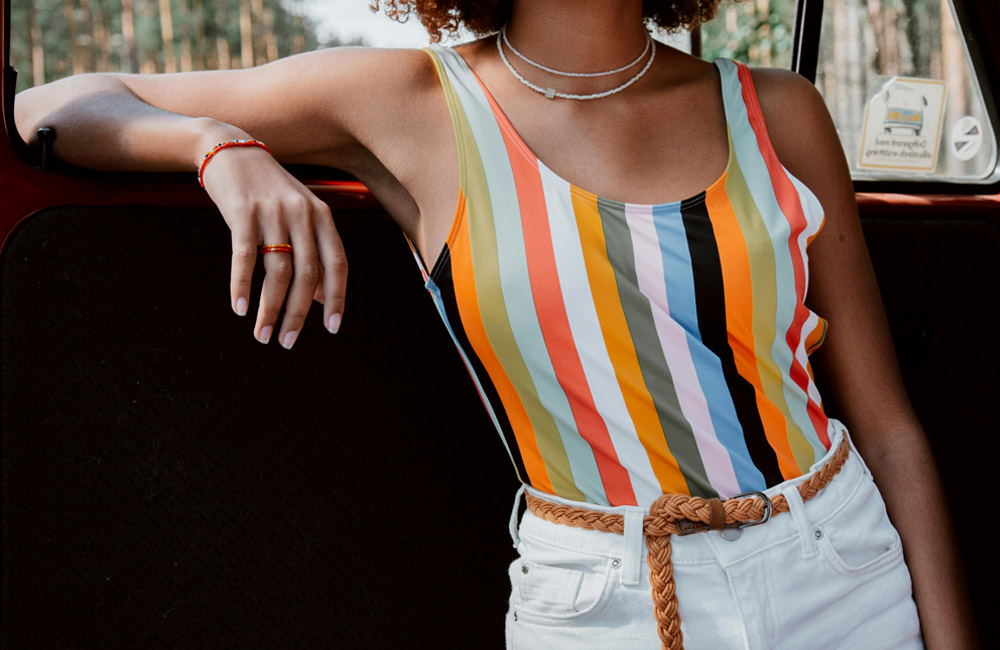
Belts are quickly shifting back to the heart of modern fashion lines. For fashion brands, wholesalers, and private labels, the real chance is not just chasing a single seasonal trend. A smarter strategy is to craft a solid core range first. Then, you can bring in specific statement styles to test in smaller batches. Here at YIHUI, we view material, buckle, and pattern creation as one unified step. These parts must blend seamlessly for both visual appeal and smooth bulk production.
Classic Leather Belts Will Remain the Commercial Core
Clean leather belts will continue to support repeat orders even as statement accessories become more visible. Black, brown, cognac, burgundy, and other wearable shades can move across workwear, denim, tailoring, and casual collections without being tied to a single season.
The change for 2026–2027 is likely to appear in the details. Instead of relying on heavy decoration, brands can update a classic belt through:
- A more defined square, oval, or rectangular buckle
- A matte, brushed, polished, or antique-effect metal finish
- Tonal stitching and carefully finished edges
- A slightly wider or narrower strap proportion
- Debossed branding on the strap, loop, or belt tip
Grain leather remains suitable for premium collections where natural surface character and long-term use matter. It can be developed with smooth, pebbled, suede-like, or embossed finishes according to the required appearance. For buyers planning a core range, approve the leather temper, thickness, backing construction, edge finish, and buckle weight together rather than selecting them separately.
Wide Belts Will Return as Strong Silhouette Pieces
Broad waist belts are gaining major traction once more. They can completely alter a garment’s shape without needing tricky tailoring. They fit perfectly over dresses, chunky knits, jackets, and tailored coats. This gives fashion brands a handy accessory that ties multiple clothing categories together.
The main business hurdle is that a wide belt cannot just be treated like a scaled-up trouser belt. A larger surface area changes how the strap flexes. It also shifts how the lining reacts and alters the tension focused around the closure.
Expected design paths include structured waist belts, wrap styles, crossed fronts, double-buckle looks, and thick straps with oversized closures. Softer fabrics might work best for wrap or tie shapes. Meanwhile, sturdy leather or reinforced PU can deliver a more rigid, architectural form.
Before signing off on a wide-belt lineup, buyers must test the strap exactly where it will be worn. A piece meant for the natural waist needs entirely different grading than one made for the hips. Hole spacing, overlap length, buckle size, and edge firmness need thorough testing across every size option.
Slim Belts Will Shift Toward Refined Styling Details
The return of wide belts does not remove demand for narrow styles. Slim belts will continue to serve denim, trousers, skirts, dresses, and layered styling, but their appeal will depend more heavily on finish quality.
A narrow strap leaves less room to hide inconsistencies. Uneven edge paint, oversized holes, bulky loops, or poorly proportioned hardware can make the product look unbalanced. Buyers should therefore focus on accurate cutting, compact buckle construction, clean stitching, and controlled strap thickness.
For 2026–2027 collections, slim belts may use small geometric buckles, double loops, metal belt tips, tonal color combinations, or subtle foil and debossed logos. Reversible or two-color effects can also add variety without making the design overly decorative.
This category is especially useful for brands developing coordinated color stories. One approved construction can be extended into several seasonal shades, allowing the collection to feel current while maintaining stable manufacturing specifications.
Buckles Will Carry More of the Design Identity
Buckle design is becoming one of the clearest ways to distinguish a belt range. Minimalist hardware will remain important for core products, while oversized, sculptural, and decorative buckles will support fashion-led capsules.
For custom development, YIHUI works with buckle materials such as zinc alloy, brass, and stainless steel. The appropriate choice depends on the design, weight target, required finish, mold structure, order quantity, and target cost.
Several buckle directions are likely to influence upcoming collections:
Oversized Statement Buckles
Large oval, round, rectangular, and irregular buckle forms can turn a simple strap into a focal accessory. However, size must be balanced against weight. A buckle that looks effective in a drawing may pull the belt forward or rotate during wear if its structure is too heavy.
Quiet Geometric Hardware
Simple polished or matte buckles remain suitable for commercial core ranges. The update may come from softened corners, flatter profiles, asymmetric shapes, or carefully controlled proportions rather than visible decoration.
Double and Alternative Closures
Double buckles, ring closures, hook structures, and wrap fastenings can give a collection a recognizable identity. These designs require careful wear testing because the closure method affects adjustment, dressing time, and strap stress.
Custom buckle logos can be created through molding, laser engraving, etching, or color filling. Metal parts should also be reviewed for nickel and lead requirements, coating consistency, corrosion resistance, and compatibility with the selected leather or PU finish.
Texture Will Become More Important Than Excess Decoration
Texture gives a belt visual depth while allowing the color palette to remain restrained. This makes it useful for brands responding to demand for distinctive but wearable accessories.
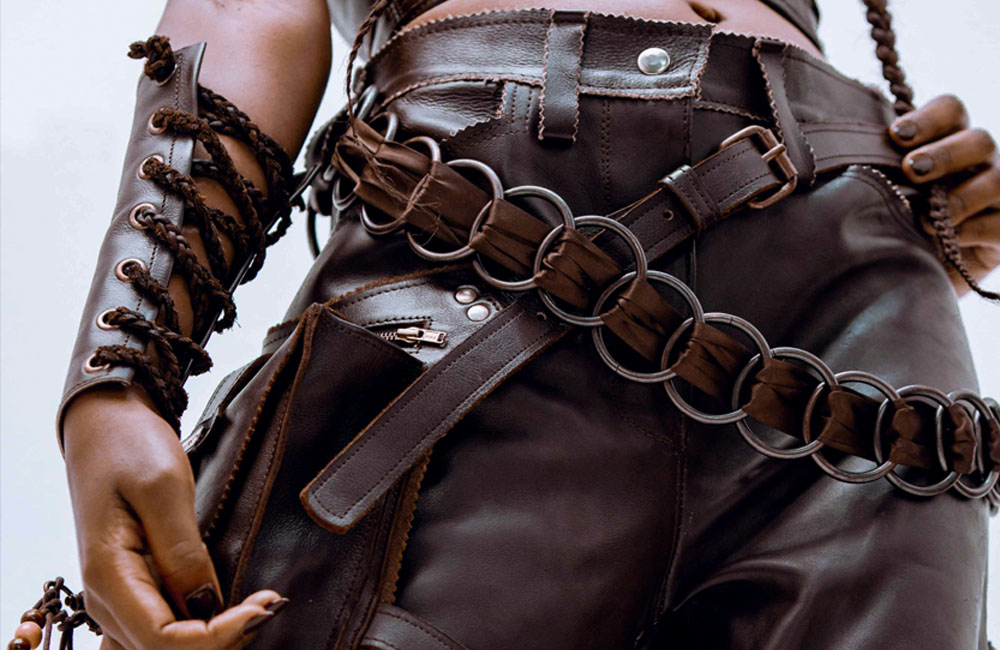
Braided and woven effects can create a handcrafted appearance, while embossing can produce geometric, crocodile, lychee, or other surface patterns. Tooling, stitching, and embroidery can add localized texture to the belt body without covering the entire strap.
The construction should match the decorative process. Embroidery introduces needle penetration and thread tension, so the strap may require suitable backing and controlled stitch density. Embossed patterns must remain clear after cutting, hole punching, bending, and edge finishing. Braided structures need consistent width and secure end assembly.
Texture should therefore be approved through physical samples. A flat artwork file cannot fully show pattern depth, hand feel, flexibility, or how the design changes when the belt is worn.
Patterns Will Move Between Natural and Graphic Effects
Patterns for 2026–2027 are likely to divide into two main groups. The first uses natural references, including animal-inspired textures, organic color variation, and aged surface effects. The second uses cleaner graphic treatments such as geometric repeats, contrast blocks, stripes, and controlled logo patterns.
PU offers useful flexibility for printed and textured collections. Gravure or digital printing can reproduce repeated graphics and color effects, while surface coating can create matte, glossy, vintage, or metallic appearances. A protective top coat may then be applied to improve surface stability.
For leather belts, buyers can consider embossing, tooling, screen printing, foil stamping, embroidery, or combinations of these methods. The design must leave sufficient clearance around holes, stitching lines, loops, buckle folds, and belt tips. Repeat patterns should also be adjusted for different sizes so that important motifs are not cut off or hidden by hardware.
Material Choices Will Become More Purpose-Led
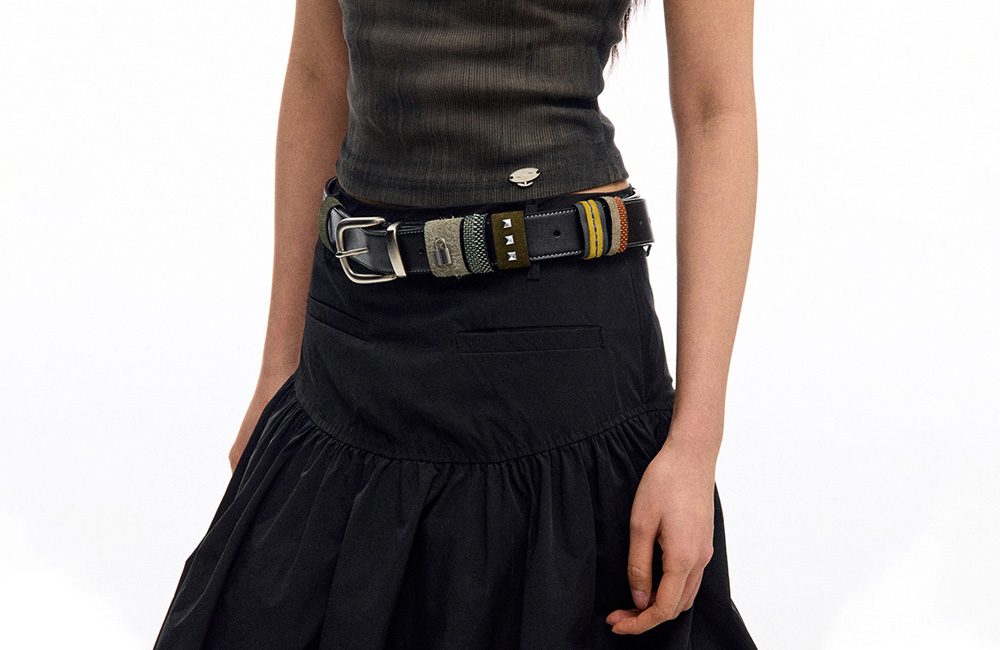
Future belt collections are unlikely to depend on one material category. Instead, buyers will select materials according to price position, performance, visual effect, and sustainability goals.
Grain leather can support premium and long-life designs. PU is suitable for consistent colors, printed effects, controlled textures, and cost-sensitive collections. Textile and braided constructions can add softness or a more casual character. Bio-based leather may also be considered for selected programs that require plant-derived content and customizable color or texture.
Claims about sustainability should be supported by clear documentation. Buyers should define the required material composition, testing scope, color standard, physical performance, and certification needs before sampling. A sustainable material still has to meet the collection’s requirements for tensile strength, flexing, surface adhesion, and colorfastness.
Buyers Should Build Trend Collections Around Controlled Risk
Not every trend should receive the same order volume. A practical 2026–2027 assortment can combine three layers:
- Core leather belts with restrained buckles and proven colors
- Seasonal updates using new widths, finishes, or textures
- Smaller statement capsules with oversized hardware, embroidery, or bold patterns
This structure gives brands room to respond to fashion changes without rebuilding the entire supply program. It also allows shared materials, buckles, colors, and packaging to be used across several designs where practical.
Sampling should confirm more than appearance. Buyers should check size grading, buckle function, strap recovery, hole strength, edge finish, hardware oxidation resistance, pattern alignment, logo position, and packaging before bulk approval.
Develop Your 2026–2027 Belt Collection with YIHUI
If you are planning a new belt range, send us your drawings, reference images, target materials, size chart, buckle ideas, and expected order quantity. Our team can help assess the design, recommend suitable production methods, and prepare samples for approval.
Explore our custom leather belt manufacturing services أو contact YIHUI to upload your files, request an online quotation, or discuss material and hardware options with our support team.
Frequently Asked Questions
Which belt styles are likely to remain commercially stable in 2027?
Classic leather belts in black, brown, cognac, and other wearable colors should remain dependable. Clean buckles and controlled proportions make these styles easier to reorder across seasons.
How can brands test statement belt trends with less inventory risk?
Brands can start with a limited capsule, use flexible order quantities where available, and share approved materials or finishes across several designs. Physical sampling should be completed before confirming bulk production.
What information is needed for a custom buckle quotation?
Provide the buckle dimensions, reference shape, logo artwork, preferred metal, finish, color, strap width, target quantity, and any market-specific testing requirements. A drawing or physical sample can improve quotation accuracy.
Can leather, PU, embroidery, and custom hardware be combined?
Yes, but the construction must be reviewed as a complete system. Material thickness, backing, stitch placement, buckle weight, folding area, and pattern position should all be confirmed during sampling.