How European Fashion Brands Can Develop Custom Belts with a China OEM Manufacturer


For European fashion brands, a belt is more than a functional accessory. It can define a silhouette, complete a collection and become an important part of a brand’s visual identity.
As fashion collections become more diverse and brands introduce more frequent capsule collections and seasonal accessories, finding a reliable custom belt manufacturer is increasingly important.
For brands looking to source from China, an experienced OEM manufacturer can provide much more than production capacity. The right partner can support material selection, product development, custom hardware, sampling, quality control, compliance, private labeling and bulk production within one integrated process.
This guide explains how European fashion brands can develop custom belts with a China OEM manufacturer and what to consider before moving from an initial concept to mass production.
1. Start with Your Belt Concept and Product Requirements
A successful custom belt project usually starts before contacting a factory.
European brands should prepare as much product information as possible, including:
- Belt style and intended market
- Target consumer
- larghezza e lunghezza della cintura
- Material preference
- Buckle design
- Hardware finish
- Logo placement
- Requisiti di colore
- Stitching and edge finishing
- Requisiti di imballaggio
- Estimated order quantity
- Target price range
You do not necessarily need a complete technical pack at the beginning.
A professional OEM manufacturer should also be able to work from:
- Sketches
- Reference images
- Existing samples
- Product photos
- CAD files
- Logo artwork
- Material references
- Pantone colors
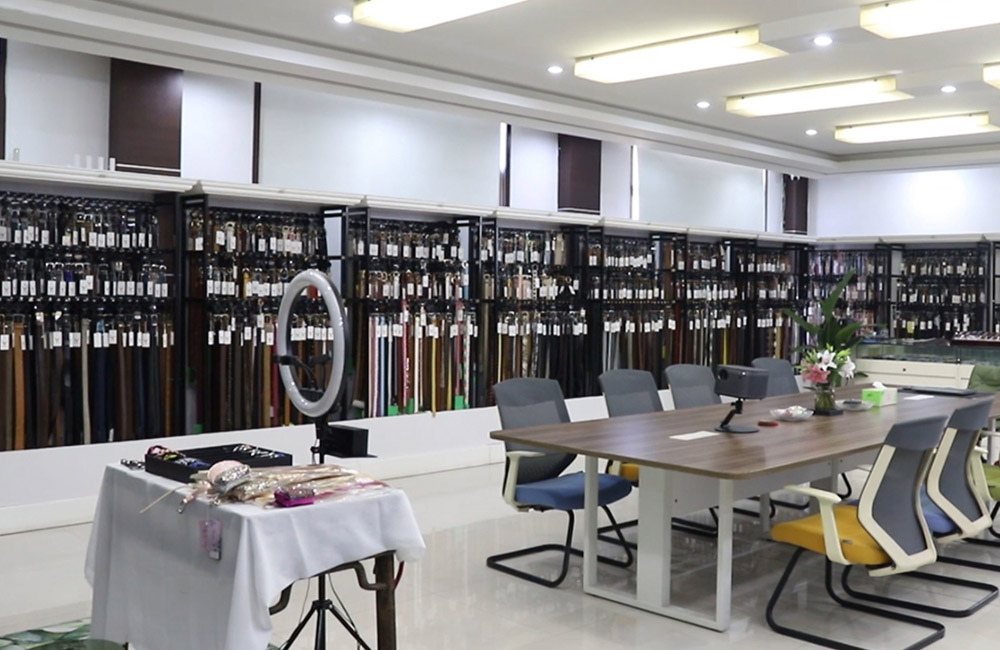
A YIHUI Pelle, our product development team works with buyers from the initial concept through sampling and production. Brands can provide artwork, sketches, images or original samples, while our team helps translate those ideas into manufacturable belt designs.
2. Choose the Right Belt Material
Material selection has a major impact on the appearance, durability, price and positioning of a belt.
Depending on the collection, European brands may consider:
Genuine Leather
Suitable for:
- Premium fashion collections
- Classic leather belts
- Dress belts
- Heritage-inspired accessories
- Long-term product lines
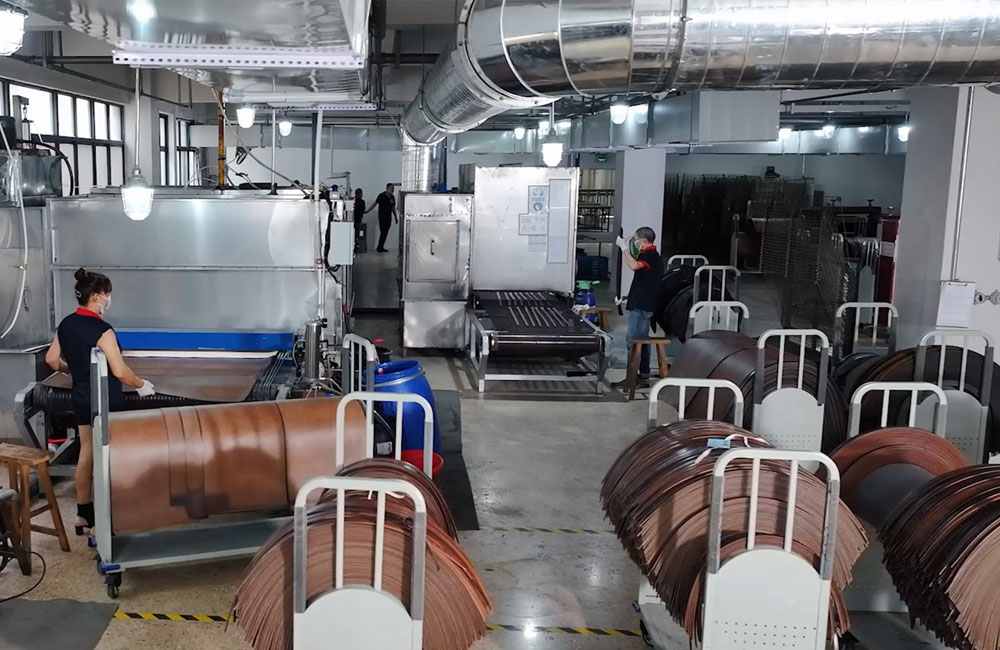
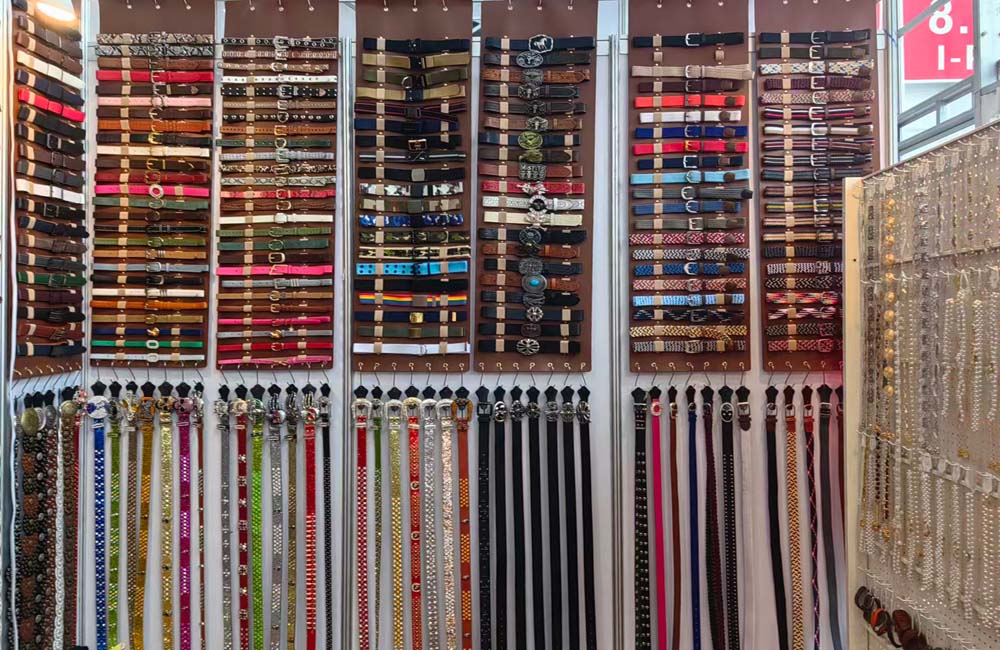
YIHUI works with different leather options and finishes, including full-grain leather, nubuck, suede, Nappa, patent, pebbled and other textures.
PU and Alternative Materials
PU and other alternative materials can provide greater flexibility for fashion collections where color, texture and price positioning are important.
Webbing and Textile Materials
Webbing belts can be suitable for:
- Casual fashion
- Streetwear
- Outdoor-inspired collections
- Seasonal accessories
- Lightweight belt designs
Custom colors, patterns and jacquard designs can also be developed for selected textile applications.
Bio-Based and Recycled Material Options
For brands with specific sustainability requirements, material selection should be discussed early in the development process.
Rather than simply choosing a material based on appearance, buyers should ask the manufacturer about material composition, available certifications, testing documentation and traceability.
3. Customize the Buckle and Hardware
The buckle is often the most recognizable part of a fashion belt.
A custom buckle can transform a standard belt into a distinctive product for a specific brand collection.
Depending on the design, brands can customize:
- Buckle shape
- Size
- Spessore
- Surface finish
- Plating color
- Logo
- Engraving
- Embossed details
- Studs
- Rivetti
- Belt loops
- Metal tips
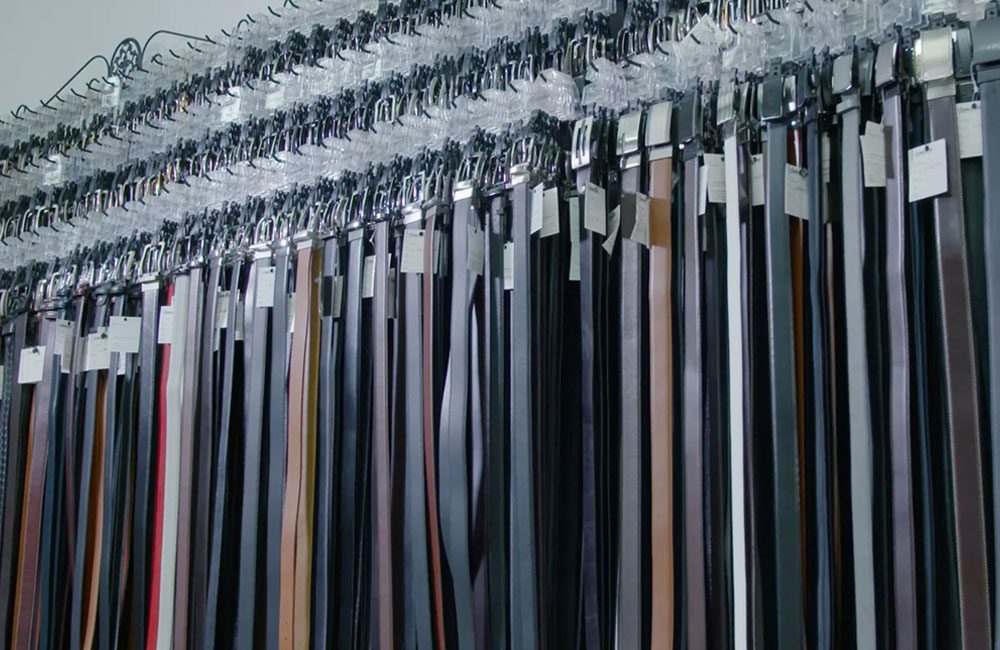
For fully customized belt buckles, YIHUI can support the development process from 3D CAD and prototyping to tooling, physical samples and mass production. Custom buckle projects can also be evaluated for RoHS and REACH requirements, with testing documentation available upon request.
This is particularly useful for fashion brands that want their belt hardware to become part of their recognizable design language.
4. Develop a Physical Sample Before Bulk Production
A sample is one of the most important stages in custom belt development.
Before approving production, brands should evaluate:
- Material hand feel
- Color accuracy
- Belt dimensions
- Stitching
- Edge finishing
- Hole positioning
- Buckle weight
- Hardware finish
- Logo placement
- Overall appearance
- Packaging
A professional manufacturer should be able to adjust the product based on sample feedback.
A YIHUI, custom belt samples can typically be developed within approximately 7–10 days, depending on the design and materials required.
For European brands developing a new collection, this sampling stage can help reduce the risk of discovering design or production problems after bulk manufacturing has already started.
5. Consider Compliance and Social Responsibility from the Beginning
For European fashion brands, product development is not only about design and price.
Buyers may also need to consider:
- REACH requirements
- RoHS requirements where applicable
- Restricted substances
- Metal safety
- Nickel content
- Lead and cadmium
- Azo dyes
- Phthalates
- Chemical testing
- Social compliance
- Factory audits
- Supply-chain transparency
YIHUI states that its materials and products can be tested for areas including APEO, AZO dyes, lead, DMF, phthalates, cadmium, Cr VI and PAHs, while its metal components are nickel-free.
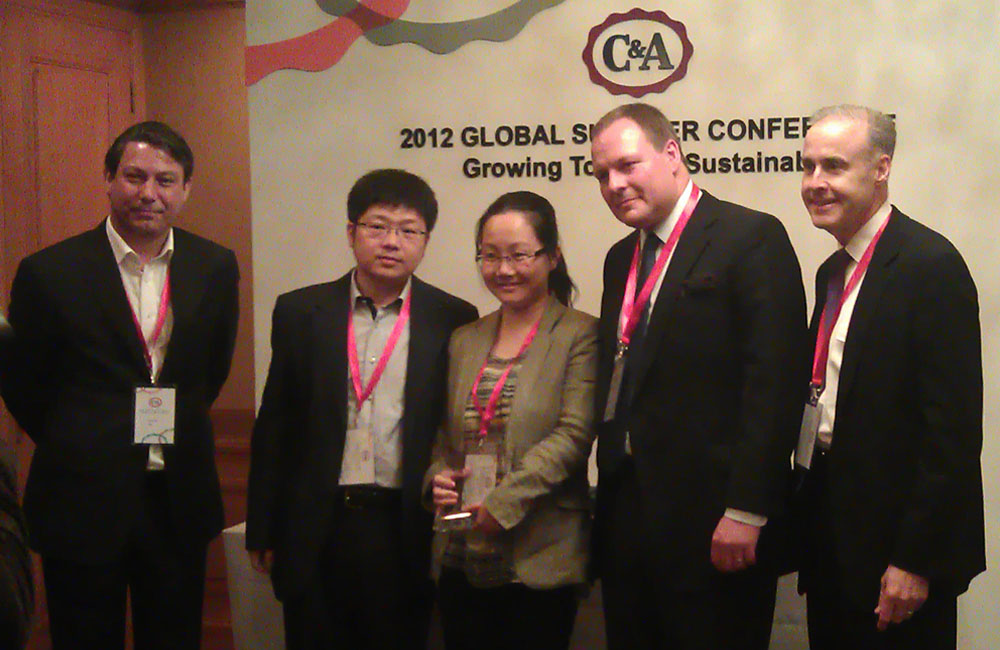
The factory also maintains or participates in several social and sustainability frameworks, including BSCI, ICS, Sedex, SLCP, Higg Index and GRS, supporting the compliance requirements of international brand customers.
Important: Specific compliance requirements should always be confirmed according to the product, destination market and buyer’s own restricted-substance requirements. A certification or test related to one product or material should not automatically be interpreted as applying to every product.
6. Make Sure the Manufacturer Can Handle Your MOQ
MOQ is especially important for emerging European fashion brands.
A large established brand may need thousands of pieces, while an independent brand may want to test a new collection with a smaller initial order.
A flexible manufacturer should ideally be able to support both:
Small trial order → New collection → Repeat order → Larger production
YIHUI provides flexible MOQ options depending on the product, materials and customization requirements. Its website lists approximately 300–500 pieces for many leather belt projects, while some custom products and material configurations can have different minimums.
For buyers, the key is not simply asking:
“What is your MOQ?”
Instead, ask:
“What is the MOQ for my specific design, material and hardware configuration?”
This gives a much more accurate picture of the real production requirement.
7. Look for a Manufacturer with Scalable Production
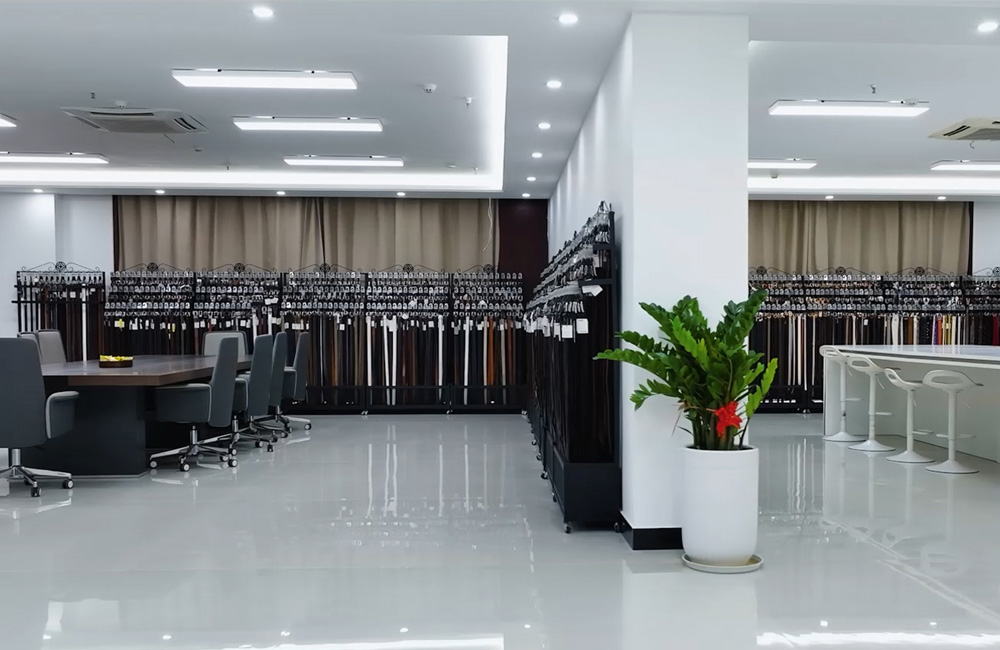
A factory should be able to support your business not only for the first order but also when your collection grows.
Important questions include:
- What is the monthly production capacity?
- Can you handle repeat orders?
- Can you maintain consistent quality between batches?
- Can you source the same material again?
- Can you maintain the same hardware finish?
- How do you manage production quality?
- Can you support multiple designs in one project?
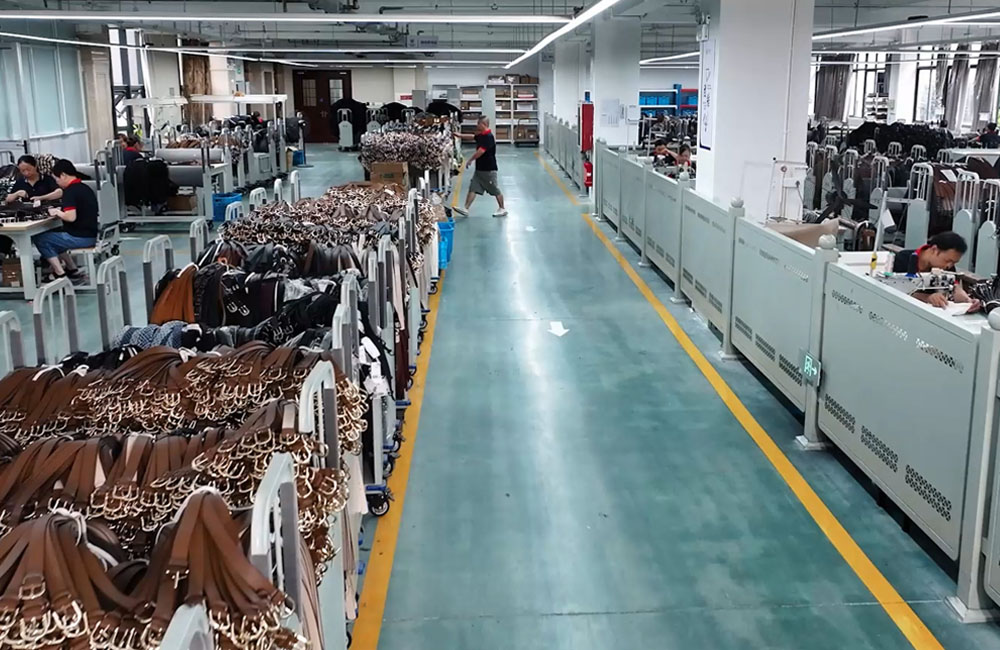
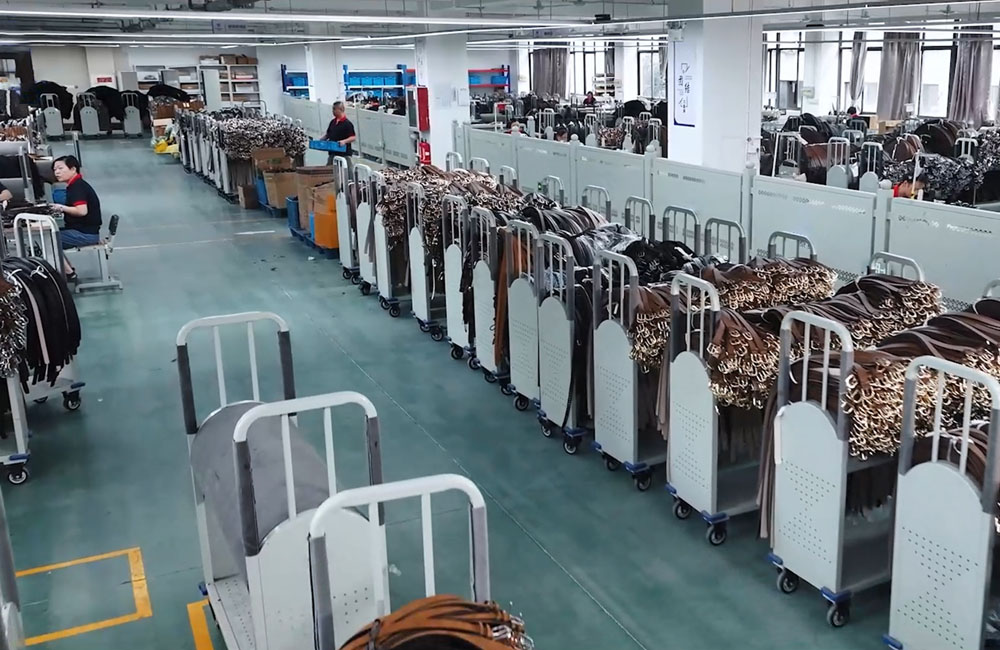
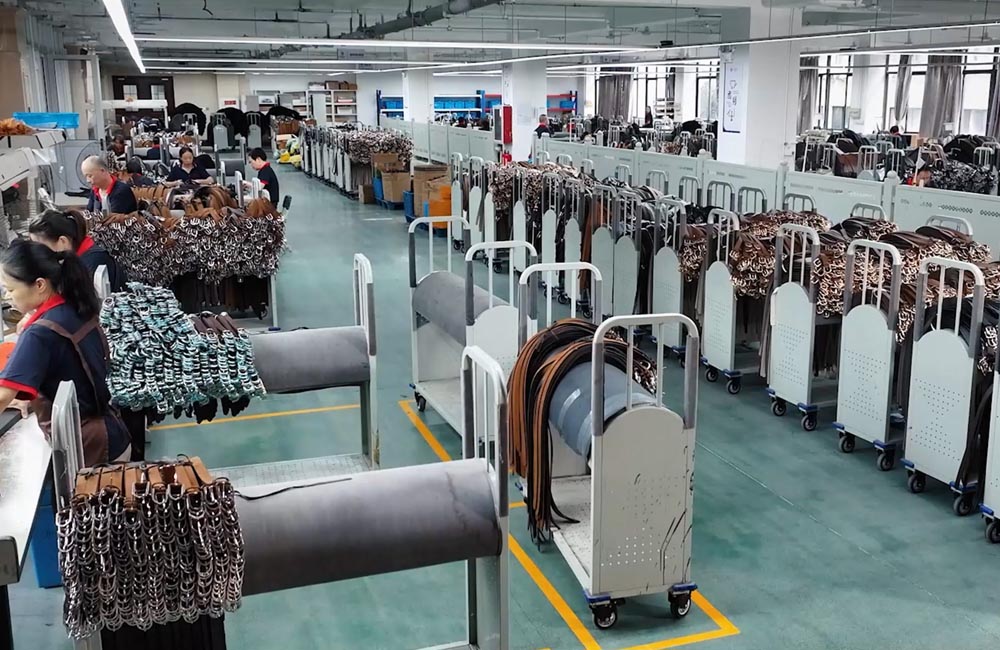
YIHUI’s production system covers cutting, sewing, punching, embossing and other belt manufacturing processes, with QC implemented from incoming materials through production and final inspection. The company currently states a belt production capacity of around 70,000 pieces per month on its manufacturing advantages page.
This allows the same supplier relationship to potentially support both initial product development and larger-scale production.
8. Quality Control Should Cover the Entire Production Process
For fashion belts, quality problems can occur at many stages.
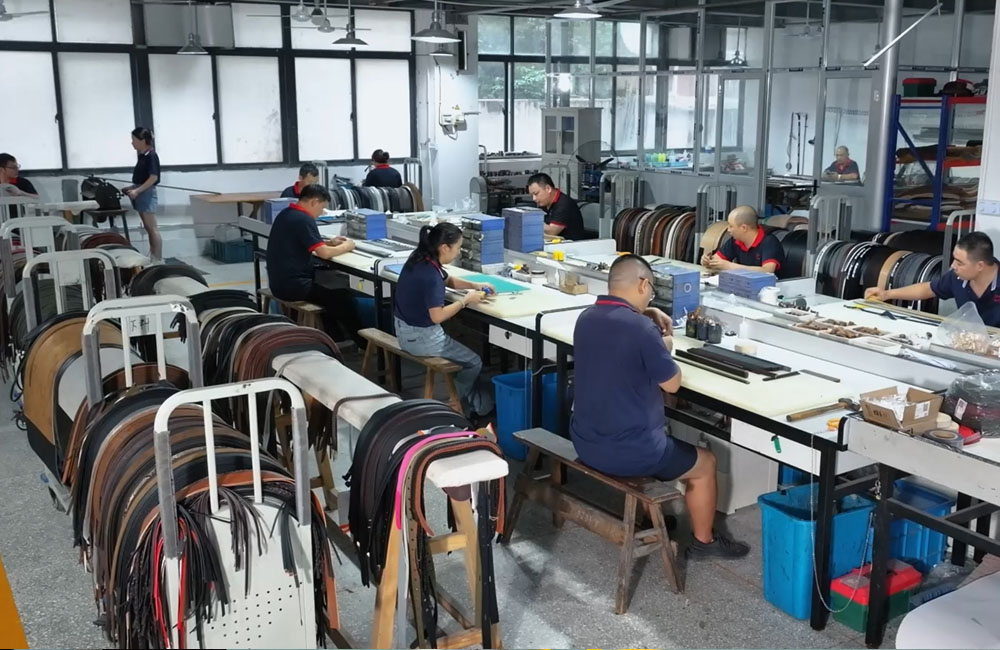
A reliable QC process should check:
Raw Materials
- Leather quality
- Colore
- Spessore
- Surface defects
- Material consistency
During Production
- Cutting accuracy
- Stitching
- Edge finishing
- Hole positioning
- Logo application
- Hardware attachment
Finished Product
- Dimensions
- Tensile strength
- Wear resistance
- Hardware oxidation resistance
- Appearance
- Packaging
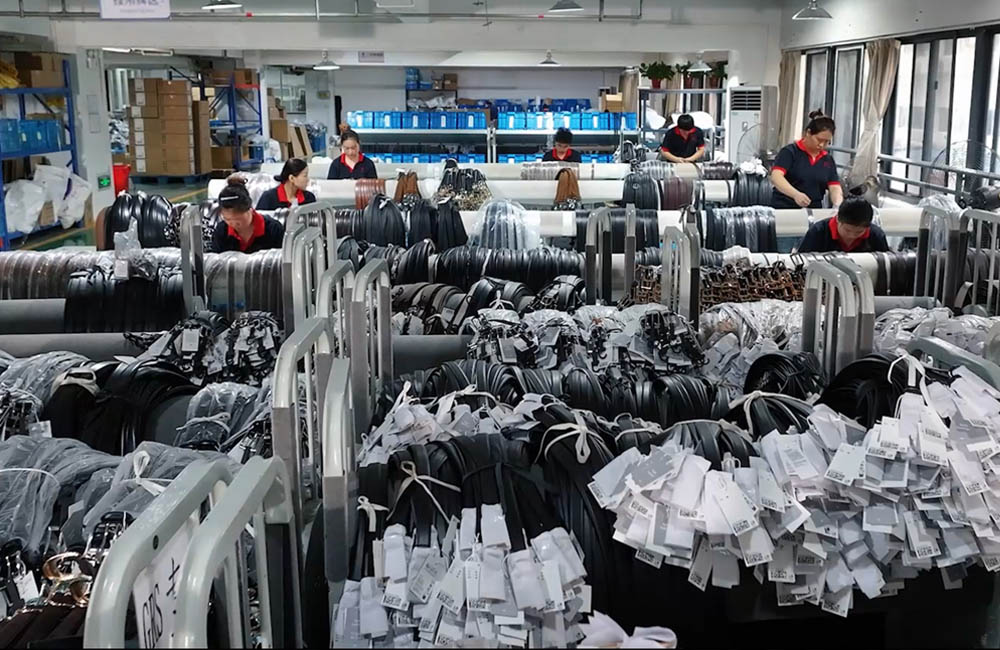
YIHUI states that its quality system includes IQC, IPQC and FQC, with inspections from incoming materials through finished products before shipment.
For European buyers, it is worth requesting the manufacturer’s QC process before placing a large order rather than evaluating quality only after the goods arrive.
9. Private Label and Custom Packaging
For fashion brands, the product itself is only one part of the customer experience.
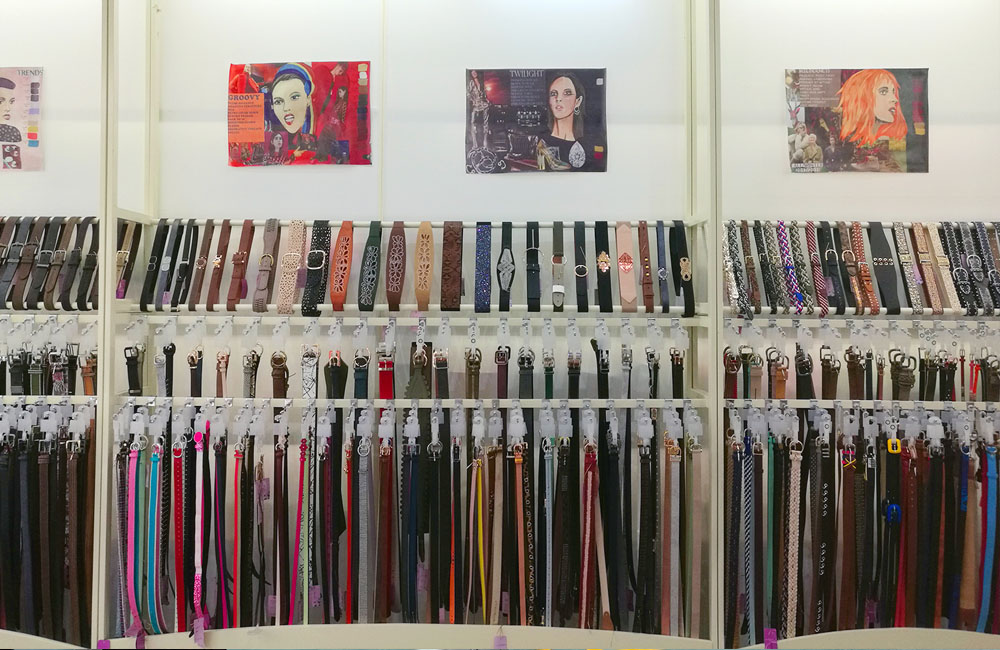
A complete private-label belt project may include:
- Custom logo
- Embossed logo
- Printed logo
- Custom labels
- Hangtags
- Care labels
- Buckle branding
- Individual packaging
- Gift boxes
- Retail packaging
- Cartons and shipping marks
YIHUI provides custom labels and packaging options as part of its belt customization service, allowing brands to develop a more complete private-label product rather than purchasing an unbranded standard belt
10. What European Brands Should Ask a China Belt Manufacturer
Before choosing a supplier, European buyers should ask a clear set of questions.
Product Development
- Can you develop belts from sketches or reference samples?
- Can you manufacture completely new designs?
- Can you customize buckles and hardware?
- Can you match Pantone colors?
- Can you develop custom packaging?
Materials
- What leather and textile options are available?
- Can you provide material specifications?
- Can you provide relevant certificates or test reports?
- Can you support alternative material requirements?
Production
- Qual è il quantitativo minimo d'ordine (MOQ)?
- What is the sample lead time?
- What is the bulk production lead time?
- What is the monthly capacity?
- Can you handle repeat orders?
Quality
- What is your QC process?
- Do you inspect incoming materials?
- How are finished products inspected?
- Can you provide inspection reports?
Compliance
- Do you have BSCI, Sedex or other social compliance documentation?
- Can you support REACH-related testing?
- Can you provide relevant product test reports?
- Can you work with third-party inspection companies?
These questions help brands compare manufacturers based on the entire sourcing process rather than simply comparing unit prices.
11. A Practical Custom Belt Development Process
For European fashion brands, the process can be simplified into seven steps:
Step 1 — Share Your Concept
Send your sketch, artwork, reference sample or product specifications.
Step 2 — Material & Hardware Selection
Select leather, PU, webbing, buckle, hardware, color and finishing.
Step 3 — Technical Development
The manufacturer evaluates construction, dimensions, materials and production feasibility.
Step 4 — Sample Development
A physical sample is created for review and approval.
Step 5 — Testing & Quality Confirmation
Review material, hardware and product requirements before production.
Step 6 — Bulk Production
After sample approval, production begins according to the confirmed specifications.
Step 7 — Final QC & Shipping
Finished belts are inspected, packed according to the brand’s requirements and prepared for international shipment.
At YIHUI, this one-stop process covers design, material selection, sampling, production, quality control and international shipping, allowing brands to manage the development process through one manufacturing partner.
Why European Fashion Brands Work with YIHUI Leather
YIHUI Leather is a China-based manufacturer specializing in custom fashion accessories and belts for brands, wholesalers and retailers.
Our capabilities include:
- 20+ years of industry experience
- OEM and ODM manufacturing
- Custom leather, PU and webbing belts
- Custom belt buckles and hardware
- Private label and custom packaging
- Flexible MOQ options
- Professional sample development
- Strict quality control
- International compliance and testing support
- BSCI, ICS, Sedex, SLCP and Higg-related credentials
- Certificato di ambito GRS
- Factory audit support
- International B2B export experience
Our 2,500㎡ facility and dedicated production and development teams are designed to support both new product development and ongoing wholesale production.
Whether you already have a complete technical pack or only have an initial belt concept, our team can help turn your idea into a production-ready product.

Ready to Develop Your Custom Belt Collection?
Choosing a China OEM manufacturer does not have to mean choosing between customization, quality and production efficiency.
With the right manufacturing partner, European fashion brands can develop custom belts from the first sketch through material selection, custom hardware, sampling, testing, production, packaging and delivery.
If you are developing a new belt collection, private-label accessories or a seasonal fashion range, send us your design, reference sample or product requirements.
YIHUI Pelle can help you evaluate the material, construction, customization options, MOQ and production process for your project.
Request a Custom Belt Quote
Send us your design or reference sample and tell us:
- Belt type
- Materiale
- Estimated quantity
- Target market
- Customization requirements
- Logo or packaging requirements
Our team will review your project and provide a tailored manufacturing solution.