
Custom Leather Belts vs Regular Belts: Which Fits Your Brand Requests?


Introduction
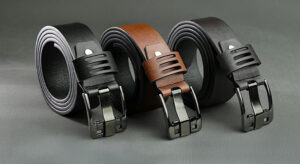
Belts are not just simple items that hold clothing pieces together, but also become an essential part of any product identity for fashion brands, retailers, and wholesalers. Materials, buckles, logos, and finishing details can influence how customers perceive a brand.
While choosing belts as wholesale or private label items, the buyers need to consider several aspects, among which are the comparison between custom leather belts and regular ones. The right choice depends on market positioning, design flexibility, manufacturing requirements, and business goals. Our company, YIHUI Leather, is always ready to offer customized belt solutions to global brands.
What Belt Materials Are Available for B2B Buyers?
Before comparing custom leather belts with regular belts, buyers should first understand the materials used in modern belt manufacturing.
| Belt Material | Key Features | Suitable Applications |
| Full-grain leather | Natural grain, premium texture, develops unique character over time | Premium fashion brands, formal belts, luxury collections |
| Split leather | Consistent appearance, versatile textures, cost-effective genuine leather option | Fashion collections, standardized retail products |
| PU | Wide color choices, flexible designs, easy maintenance | Trend-focused collections and large-volume production |
| Microfiber leather | Lightweight, wear-resistant, stable performance | Modern fashion accessories and vegan-friendly markets |
| Bio-based leather | Sustainable material option with customizable textures and colors | Eco-conscious brands and innovative collections |
| Webbing materials | Strong structure, casual appearance, flexible styling | Outdoor, casual, and lifestyle products |
YIHUI Leather provides various material solutions, including genuine leather, PU leather, microfiber leather, bio-based leather, and high-tensile webbing. This allows buyers to select materials based on their target customers, price range, and product positioning.
What Is the Difference Between Custom Leather Belts and Regular Belts?
The main difference between custom leather belts and regular belts goes beyond material alone. It involves the level of control throughout the product development process.
Regular belts usually follow existing designs, standard sizes, and fixed materials. They suit buyers who need straightforward sourcing with limited customization needs.
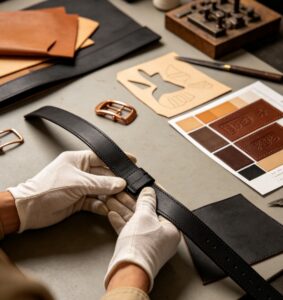
Custom leather belts allow brands to define every key element of the product. These include strap material, dimensions, buckle style, stitching, logo application, packaging, and finishing methods.
For B2B buyers, this difference creates more opportunities to develop a distinctive product line.
| Comparison Factor | Regular Belts | Custom Leather Belts |
| Design | Fixed styles and specifications | Fully adjustable design solutions |
| Material Selection | Limited available options | Leather, PU, microfiber, bio-based leather, webbing and more |
| Branding | Usually no private label options | Logo, labels, packaging, and hardware customization |
| Size Options | Standard sizes | Customized widths and lengths |
| Market Position | General retail products | Private label and brand-focused collections |
| Production Support | Simple purchasing | OEM/ODM development and manufacturing support |
At YIHUI Leather, we customize belt structures according to brand requirements. Buyers can adjust belt width, length, buckle type, embossing, stitching, labels, and retail packaging to create products that match their market strategy.
Why Do Brands Choose Custom Leather Belts?
Custom leather belts provide more than visual differentiation. They help brands produce items that align with customer expectations and target market requirements.
Better Brand Recognition Through Custom Details
A belt can become an important element of a brand’s accessory identity. Small elements such as an embossed logo, custom buckle, or special texture can make a product stand out to customers.
More Control Over Product Design and Performance
Different markets require different belt constructions. A formal business belt may require refined leather and elegant hardware. In contrast, casual collections may emphasize flexible materials and modern patterns.
For example, knitted belts provide flexible adjustment through their woven structure, while flat belts offer a stronger and more structured style for casual and workwear applications.
This flexibility helps brands develop products that match their target market requirements rather than selecting from limited stock designs.
Stronger Long-Term Product Value
A customized belt collection lets brands create unique products instead of competing mainly on price. Customers often link well-designed accessories to higher quality and greater brand credibility.
For retailers and distributors, custom production also creates chances for exclusive collections that cannot be compared directly with standard market products.
When Are Regular Belts a Better Choice?
Regular belts may still suit certain sourcing models. Buyers who need quick inventory, basic designs, or low-risk sourcing decisions may prefer standard products.
However, regular belts usually provide fewer customization options. The size, material, buckle, and look are usually set in advance. This makes it hard for brands to build a differentiated product line.
For businesses entering the accessories market, custom production can offer a more adaptable way to test designs while keeping brand consistency.
How Can Brands Customize Their Belt Designs?
The customization process usually begins with a clear view of the target market and product needs.
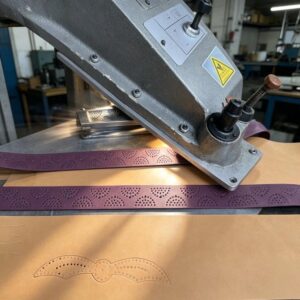
At YIHUI Leather, our OEM/ODM process includes design communication, material selection, sample development, production, quality inspection, and global delivery. Buyers can provide sketches, reference images, technical files, or existing samples. Our team then helps turn those ideas into production-ready solutions.
Customization options include:
- Strap materials and surface textures
- Belt width and length
- Buckle shapes and finishes
- Logo embossing and printing
- Stitching methods
- Labels and packaging solutions
For brands developing elastic or flexible waist accessories, we can also support requirements related to custom elastic waistband designs, custom waistband structures, and tailored waistband solutions based on different product concepts.
What Should B2B Buyers Consider Before Ordering Custom Belts?
Choosing the right leather belt manufacturing partner involves much more than evaluating product appearance. It is important to look into production capacity, quality control systems, customization expertise, and compliance standards.
YIHUI Leather has more than 20 years of belt manufacturing experience, and we can provide OEM/ODM services for global brands, retailers, and distributors.
Important factors include:
| Evaluation Point | Why It Matters |
| Material capability | Ensures the belt matches target market needs |
| Customization experience | Reduces development risks |
| Quality control system | Maintains consistency in bulk production |
| Sampling process | Helps confirm design before mass production |
| Compliance support | Supports international market requirements |
Our materials and finished products are inspected according to strict quality requirements, including tests related to harmful substances and hardware safety. We also provide certifications and compliance support for international customers.
Start Your Custom Belt Project With YIHUI Leather
Choosing between custom leather belts and regular belts depends on your business goals. If you are building a private label collection, expanding an accessories category, or developing exclusive designs, customization provides greater control over quality, branding, and market positioning.
On the YIHUI Leather Official Website, we support brands with complete belt customization services, from material selection and design development to production and packaging. Send your belt design files, product requirements, or reference samples to our team for a professional quotation. You can also contact us directly for material recommendations, sample support, and OEM/ODM consultation.
FAQ
What is the MOQ for custom leather belts?
The MOQ depends on the specific design, material, and customization requirements. YIHUI Leather generally supports custom belt projects with flexible order quantities to help brands test new collections.
Can I customize the belt with my own logo?
Yes. We provide multiple logo customization options, including embossing, foil stamping, printing, and customized hardware solutions according to your design requirements.
How long does custom belt production take?
Sample development usually takes around 7–10 days, while bulk production timelines depend on product complexity and order quantity. Our team will confirm the schedule after reviewing your project details.
What file formats can I send for belt customization?
You can provide design files such as PDF, TIF, JPG, or PSD formats. Reference images and technical specifications are also helpful for accurate development.
Can you ship custom belts internationally?
Yes. YIHUI Leather provides global shipping support through professional logistics partners, helping international buyers receive customized belt orders efficiently.