
How to Evaluate Custom Tooled Leather Belts for Your Fashion Brand Before Bulk Production


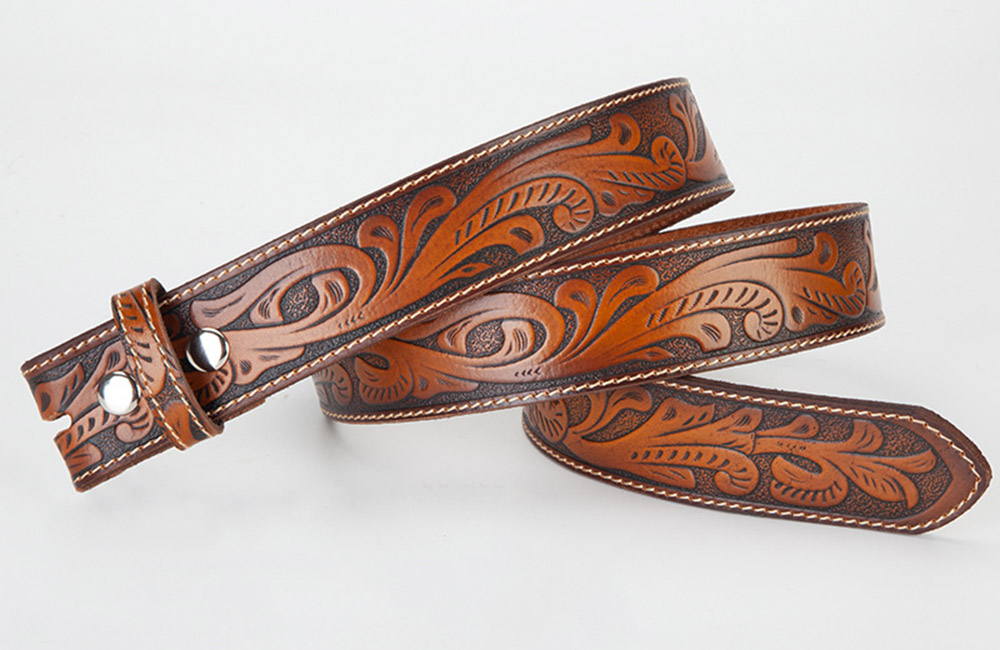
A custom tooled leather belt may look impressive in a supplier photo, but visual appeal alone is not enough for bulk production approval. A pattern that looks perfect on one sample may change after size grading, repeated bending, hardware assembly, or large-scale production.
For fashion brands, working with an experienced custom leather belt manufacturer is essential to turn creative concepts into repeatable products. YIHUI Leather helps brands evaluate tooling methods, leather selection, hardware details, and production requirements during the development stage, ensuring that approved samples can move smoothly into bulk production.
A reliable evaluation process helps reduce quality risks and ensures that the final belts match the brand’s design expectations.
Confirm the Tooling Design Matches Your Brand Brief
The first step is to check whether the supplier’s sample accurately represents the intended design.
“Tooled leather belt” can refer to different decorative processes, including hand tooling, stamping, embossing, or combinations with coloring, foil, printing, or laser effects. The production method affects the final appearance, repeatability, and cost.
Before approving a sample, ask the manufacturer to confirm:
- Tooling method and equipment used
- Pattern depth and texture effect
- Decoration position on the strap
- Distance between the pattern and buckle, holes, tip, and edges
- Whether the design changes across different belt sizes
A professional artwork file should include clear production instructions, such as:
- Pattern dimensions
- Repeat direction
- Color requirements
- Revision number
- Decoration area
A key point for buyers is that the tooling effect must be evaluated on the actual belt structure, not only on artwork. A pattern that works on a flat design may need adjustment around curves, holes, or buckle folds.
Check Whether the Leather Supports the Tooling Effect
The leather choice directly affects how clearly the pattern appears and how well the belt performs after repeated use.
Different materials create different results:
| Material | Suitable Applications | What Buyers Should Check |
| Grain leather | Premium fashion belts requiring natural texture and refined hand feel | Grain consistency, thickness, flexibility, and finish stability |
| Split leather | Embossed textures and cost-controlled fashion designs | Coating durability, surface adhesion, and bending performance |
| PU leather | Fashion collections requiring strong colors and consistent appearance | Surface flexibility, coating adhesion, and wear resistance |
| Microfiber leather | High-performance synthetic leather alternatives | Backing structure, flexibility, and long-term durability |
| Bio-based leather | Brands requiring documented non-animal material options | Material composition, testing documents, and claim support |
YIHUI’s leather belt customization program includes multiple material options, including grain leather, split leather, PU leather, microfiber leather, and bio-based alternatives. Buyers should select the material according to the target market, price positioning, design effect, and required performance.
When reviewing a sample, do not only check the surface pattern. Compare:
- Strap thickness
- Flexibility around holes
- Edge quality
- Backing comfort
- Recovery after bending
A good tooled leather belt should maintain both decorative clarity and wearing comfort.
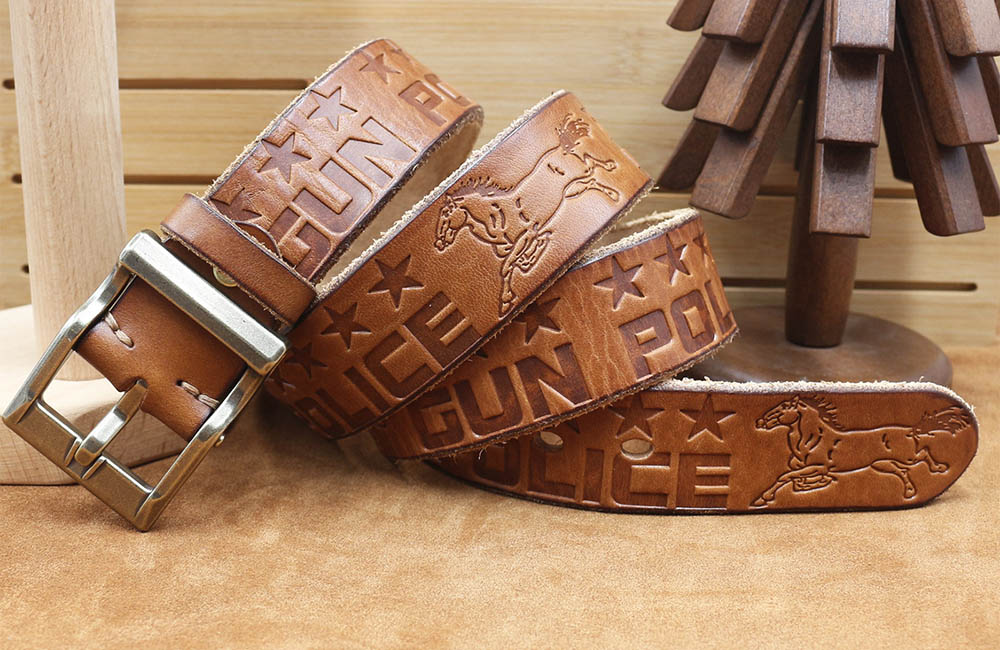
Inspect Sample Construction and Finishing Details
A successful leather belt is not only about decoration. The buckle, strap construction, and finishing details must work together.
During sample approval, check the following areas:
Tooling and Surface Finish
Inspect:
- Pattern sharpness
- Embossing or tooling depth
- Texture consistency
- Color or coating uniformity
- Surface cracking after bending
The decorated area should keep its definition without showing stress marks, peeling, or finish damage.
Strap Construction
Review:
- Width and thickness
- Hole position and spacing
- Stitching quality
- Buckle attachment
- Keeper strength
- Tip finishing
Pay special attention to different sizes. A centered pattern on a medium size belt may shift closer to the holes or tip on smaller and larger sizes.
Edge Quality
Edges influence both appearance and customer experience.
Check whether the edge finishing is:
- Smooth and consistent
- Free from loose fibers
- Properly colored or burnished
- Comfortable against clothing and skin
A retail-ready belt should look consistent from the buckle area to the strap end.
Verify Testing and Quality Evidence Before Production
Before approving bulk production, confirm that the supplier has a clear inspection process and testing records suitable for the product requirements.
Important checkpoints include:
| Checkpoint | Evidence to Request |
| Flex and wear performance | Test method, duration or cycles, before/after photos |
| Color and finish durability | Rub resistance, transfer, cracking, peeling results |
| Hardware performance | Component specifications, function checks, oxidation testing if required |
| Final appearance | Inspection standard, defect criteria, approved sample reference |
Create a Controlled Approval Record Before Bulk Production
A signed sample is only useful when it can be used as a future production reference.
Before releasing an order, prepare an approval package containing:
- Approved physical sample
- Sample revision number
- Bill of materials
- Material specifications
- Size measurement chart
- Hardware details
- Packaging requirements
- Testing records
- Inspection standards
This prevents problems during repeat orders because production teams and inspectors can compare the finished belts against the same approved reference.
For fashion brands building seasonal collections, this record is especially important because small changes in leather, tooling depth, or hardware finish can affect the final appearance.
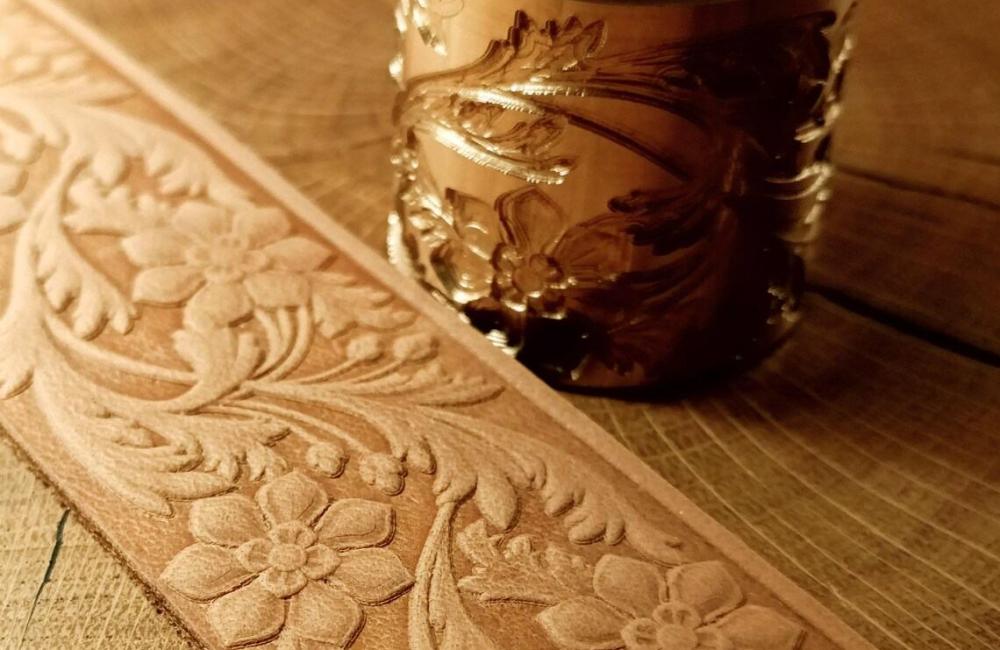
Work with a Manufacturer That Supports Sample Approval Before Bulk Production
For custom leather belts, sample approval is a critical step before mass production. YIHUI Leather provides custom sampling services, allowing buyers to review the design, material, and construction details before moving into bulk orders.
Even after technical approval, buyers should confirm the commercial conditions before production starts.
Discuss:
- Tooling cost
- Sample charges
- MOQ
- Unit price
- Packaging requirements
- Production lead time
- Reorder process
- Change approval procedure
A clear release process usually follows four stages:
Stage 1: Artwork and Tooling Approval
Confirm the design file, tooling method, pattern placement, and production limitations.
Stage 2: Material and Construction Approval
Approve leather, backing, dimensions, hardware, stitching, and comfort.
Stage 3: Pre-Production Sample Approval
Confirm the final sample, testing records, packaging, and inspection requirements.
Stage 4: Bulk Production Release
Start manufacturing only according to the approved sample revision and written specifications.
What Buyers Should Confirm with a Custom Leather Belt Manufacturer
When working with a custom belt supplier, buyers should confirm the supplier’s actual capabilities before development begins.
For brands developing custom tooled leather belts, YIHUI Leather supports customization from strap dimensions and leather selection to buckles, embossing, stitching, labels, and packaging. Its production capabilities include embossing, hot stamping, computerized sewing, and punching, enabling design concepts to move from prototype to production.
Before starting a tooled leather belt project, confirm:
- Available tooling methods
- Material options
- Sample development process
- Tool ownership
- MOQ
- Production timeline
- Quality control requirements
This ensures the design concept can move from sample approval to stable bulk production.
Final Checklist Before Bulk Production
Before placing a bulk order for custom tooled leather belts, confirm:
✓ The tooling design matches the approved artwork
✓ The leather and finish support the required pattern effect
✓ The belt passes appearance and functional inspections
✓ Hardware, stitching, and dimensions are approved
✓ Testing documents match the actual product
✓ The approved physical sample (gold sample) and specifications are revision-controlled
A successful custom belt project is not only about creating an attractive design. It is about proving that the same quality can be repeated across hundreds or thousands of units.
By evaluating the sample systematically before production, fashion brands can reduce quality risks and build a more reliable supply chain for custom leather accessories.
Why Work with an Experienced Custom Leather Belt Manufacturer?
Developing a tooled leather belt requires coordination between design, leather selection, tooling, hardware, and production control.
An experienced manufacturer can help brands:
- Evaluate whether artwork can be produced consistently
- Recommend suitable leather structures
- Adjust tooling details before sampling
- Control quality during bulk production
- Maintain consistency for future reorders
YIHUI Leather supports custom leather belt development for fashion brands, including design customization, material selection, embossing, stitching, hardware, labels, and packaging.
Ready to Start Your Custom Leather Belt Project?
Contact YIHUI with your:
✓ Belt artwork or reference image
✓ Target material and finish
✓ Size range and quantity
✓ Packaging requirements
Our team will help you review the project requirements and develop a custom tooled leather belt sample that matches your brand vision.
FAQ
What is the difference between tooled, stamped, and embossed leather belts?
These terms may overlap in the market, but the actual production method determines the final appearance and repeatability. Buyers should ask the supplier to confirm the tooling process, pattern depth, and production control method.
Which leather is best for custom tooled leather belts?
There is no single best option. The right material depends on the required tooling effect, durability, price positioning, and brand requirements.
What should a custom tooled leather belt RFQ include?
A complete RFQ should include artwork, tooling requirements, leather selection, dimensions, sizes, hardware details, tolerances, testing requirements, packaging, target market, quantity, and timeline.